

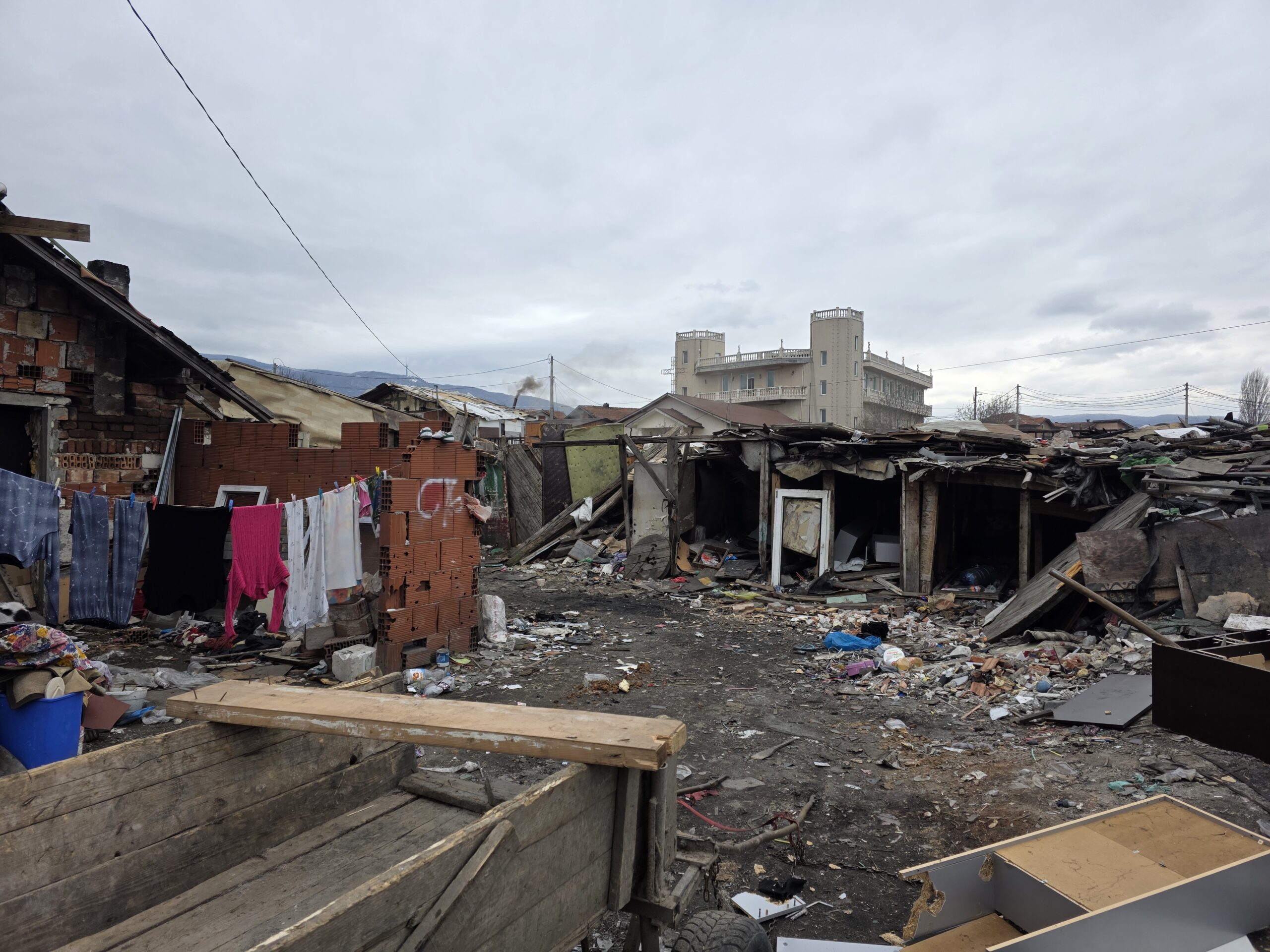
The fight against homelessness in the EU: a new political impetus and the challenges facing Bulgaria
A crucial moment in the fight against homelessness in the EU
This month, the topic of homelessness occupies a leading place on the European agenda. The European institutions have opened an important window of opportunity for the Union to translate its commitment to ending homelessness into concrete and sustainable action.
European Call to Action
On 3 March, the President of the European Commission issued a strong call to action at the Employment and Social Rights Forum. It was highlighted that more than one million people in the EU are living without a home, a situation that is incompatible with the ambition of a fair and inclusive European Union.
This call has received broad support from both civil society organisations and the European institutions.
Strengthening political engagement
On 9 March, the Employment, Social Policy, Health and Consumer Affairs Council (EPSCO) issued its strongest statement yet, calling for stronger action against homelessness in the framework of the 2026 European Semester.
Ministers stressed the need to:
- Applying housing-based approaches
- Expanding the Housing First model
- Using proven solutions with a long-term impact
Strategic priorities of the EU
There is also growing momentum around the EU’s future anti-poverty strategy. Several Member States, including Slovakia, have made homelessness a central priority, including with proposals to create a European Homelessness Guarantee – a commitment to ensure access to housing and support for all those affected.
The European Parliament has also underlined the urgency of the issue in its latest reports, calling for:
- higher ambition at European level
- real progress in the implementation of ‘Housing First’
- expanding housing solutions in all Member States
Housing as a basic social right
In the European legal and political framework, housing is recognised as a fundamental social right. The main principles include:
- Access to adequate housing
- Protection against homelessness
- Proportionality in forced removals (evictions)
- Special protection for vulnerable groups
Key EU recommendations to tackle homelessness
Recent policies and reports at European level outline several key areas for action:
- Strengthening the European Platform on Combating Homelessness
- Capacity development for housing-based solutions
- Expansion of the “Housing First” model
- Improving access to social housing
- Strengthening the European Child Guarantee
However, a challenge remains to achieve a unified and coherent approach at EU level. Some of the proposed solutions still focus on market mechanisms such as supply and demand, rather than on the social function of housing.
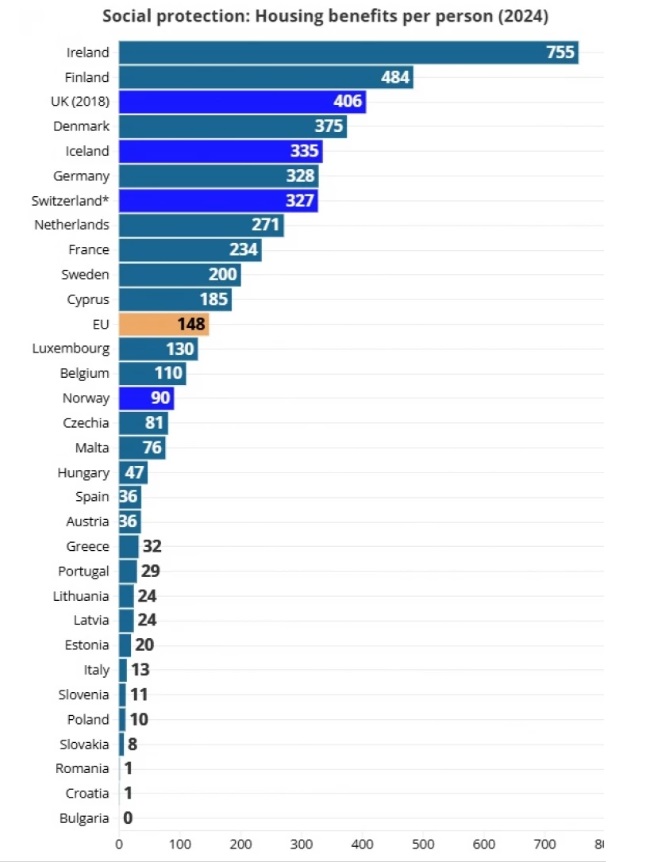
Source: Evrostat
The need for a human rights-based approach
To be effective, European housing policy must put a human rights-based approach at the centre. This means prioritizing efforts on people experiencing the most severe forms of housing exclusion.
Bulgaria in the context of European policies
In Bulgaria, there is a regulatory framework for minimum housing standards, which includes:
- minimum living area
- access to water and electricity
- Sanitary conditions
- Natural lighting
- Infrastructure of the environment
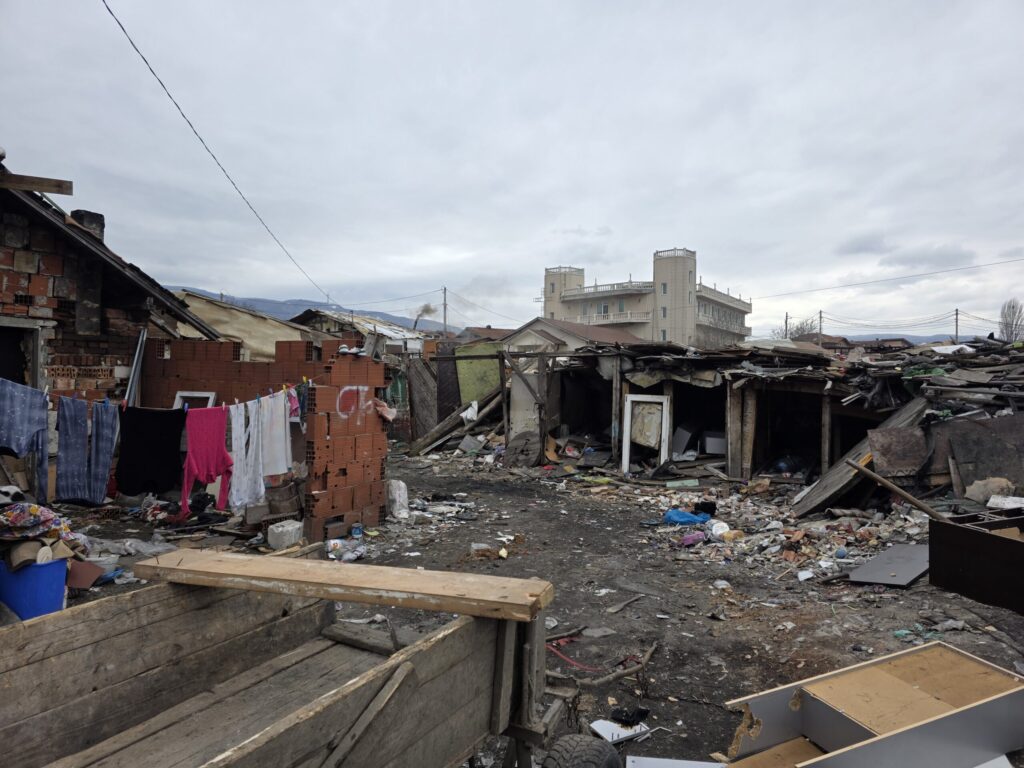
Picture from Fakulteta neighbourhood, Sofia
However, a significant proportion of people from vulnerable groups live in conditions that do not meet these requirements, falling into categories of housing insecurity and inadequacy.
Limited social support
Bulgaria ranks last in the EU in terms of housing benefits. There are no effective mechanisms to help people in difficulty, and social housing is not clearly regulated as a service in national legislation.
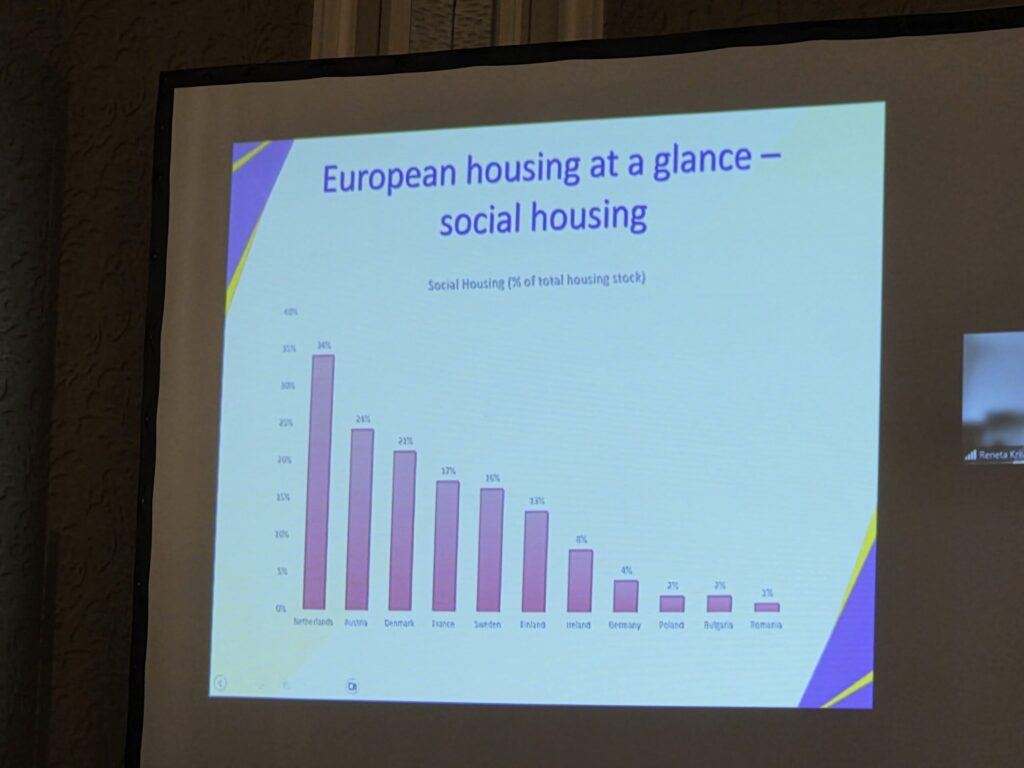
Source: Presentation “European approaches to housing rights and Roma inclusion”
Author: Reneta Krivonozova, Accredited Parliamentary Assistant, European Parliament
At the moment:
- there are about 35,200 municipal dwellings
- Only about 900 are social housing built under European programs
- A large part of the available fund is outdated and insufficient
Main systemic deficits
The analysis shows the presence of serious structural problems:
- Lack of mechanisms for early identification of housing vulnerability
- Absence of an institution with clear responsibility for social housing
- Focus on illegal construction instead of social needs
- Limited and underdeveloped social housing stock
Conclusion
Despite the increased attention at European level, Bulgaria is still lagging behind in the development of effective policies to tackle homelessness. A clear strategy, a sustainable social housing model and strong institutional commitment are needed to ensure the right to a decent home for all. This is one of the reasons why we are part of the SOLACE-CEE project. Thanks to it, our team has launched a specialized training on the Housing First model, with the first stage taking place earlier this month in Brussels. This is how we start this approach in our country and establish ourselves as a pioneer in Bulgaria in this field.
